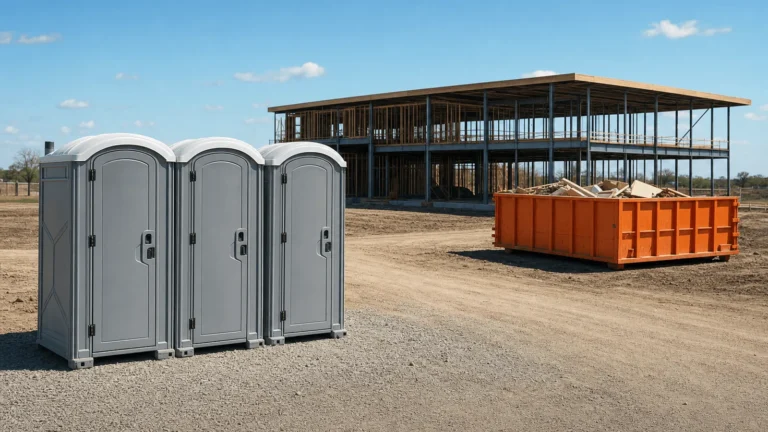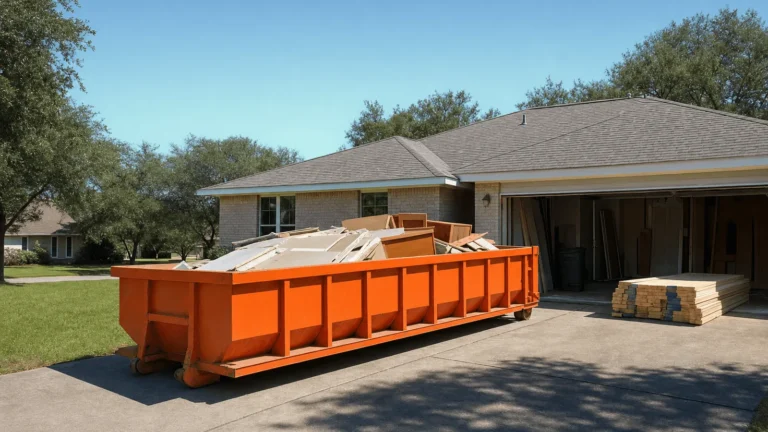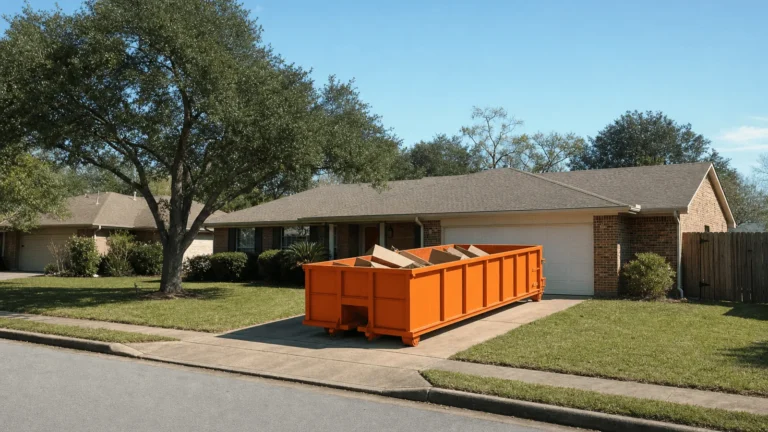
Standard 30 yard dumpster dimensions are 22 feet long, 8 feet wide and 6 feet high, and our 30 yard roll-off carries up to 9 tons of debris. The 30 in the name is a volume rating, not a length. It’s the dumpster size homeowners and contractors pick when a 20 yard dumpster is too small but the load is still mostly bulky, light debris.
This guide covers the box itself, not dumpster rental terms. You’ll see how it compares with our other sizes, whether it fits your driveway, what goes in it and how to load it. When you’re ready to book, our 30 yard dumpster rental page has the details.
30 yard dumpster dimensions at a glance
| Measurement | 30 yard roll-off |
|---|---|
| Length | 22 ft |
| Width | 8 ft |
| Wall height | 6 ft |
| Max weight | 9 tons (18,000 pounds) |
| Rated volume | About 30 cubic yards |
Nine tons is 18,000 pounds, since a short ton is 2,000 pounds. The length and width are the numbers that matter for placement. The 6 foot walls are what make this a 30 instead of a 20.
What the 30 in 30 yard dumpster means
The 30 is a volume rating of about 30 cubic yards of debris. It isn’t a length or a width, so a 30 yard dumpster is not 30 yards long. One cubic yard is 27 cubic feet, per the NIST measurement tables. Picture a pile 3 feet long, 3 feet wide and 3 feet tall.
How much actually fits depends on the debris and how you load it. Furniture and odd-shaped items leave air gaps that waste room. Flat material like drywall and lumber packs tighter. A loosely loaded box fills up long before it holds its rated volume.
How the 30 yard compares with other dumpster sizes
All three of our sizes sit on the same 22 by 8 foot footprint. Only the wall height and the weight limit change.
| Size | Length x width x height | Max weight |
|---|---|---|
| 20 yard | 22 x 8 x 4 ft | 10 tons |
| 30 yard | 22 x 8 x 6 ft | 9 tons |
| 40 yard | 22 x 8 x 8 ft | 8 tons |
Notice the weight column runs backward. The smallest box carries the most, because the bigger boxes carry more steel. You can see it in manufacturer specs.
Wastequip’s roll-off brochure lists its standard rectangular 20, 30 and 40 yard containers at 4,320, 4,897 and 5,493 pounds empty. That is one manufacturer’s box, not ours, but the pattern holds.
So the 30 yard is the middle ground. It’s rated for 10 more cubic yards than our smaller container and gives up only one ton of weight allowance. That extra space is what bulky materials need. The 40 yard roll-off adds two more feet of wall for big, light construction waste.
If your debris is mostly heavy materials, the 20 yard dumpster is usually the safer pick. Our dumpster size guide helps you find the right dumpster size for more projects.
Will a 30 yard dumpster fit in your driveway
If a 20 yard fits, a 30 yard fits too. They share the same footprint, so the driveway check is identical. Walk the spot before you book.
- Find a level, firm area at least 22 feet long and 8 feet wide. On a residential lot that’s usually the driveway, and on a job site it’s any open, solid patch the truck can reach.
- Leave room for the truck to line up and back in.
- Look up. The truck tilts its bed to slide the box off, so low branches and wires can get in the way.
- Check gates, mailboxes and parked cars along the path.
A box that has to sit in the street is a different story, because a city permit can apply. Our dumpster permit guide covers how that works in Houston.
What fits in a 30 yard dumpster
The 30 yard earns its place on big jobs that throw off a lot of bulky debris. These are the projects it handles well.
- A whole-home cleanout before a sale or a move, garage and attic included
- An estate cleanout
- A large home renovation or an addition
- Siding or window replacement on a small or mid-size house
- Drywall, insulation and carpet tear-out after water damage
- Framing and trim waste on new home construction
- Yard waste and brush from a big landscaping project
Typical debris includes household junk, furniture, cabinets, drywall, lumber, carpet, siding, and yard waste and brush. That covers most construction debris and interior demolition debris from a remodel, minus the materials we can’t take.
Contractors use the 30 yard for construction waste on residential and commercial renovations, where volume matters more than weight. One box with enough capacity for the whole construction project also saves you a second haul halfway through the job.
Use the length. Long, flat items like lumber and drywall can lie along the 22 foot floor instead of standing on end, which leaves more room on top.
When the 9 ton weight limit matters more than space
Most loads run out of room before they run out of weight. Bulky, light debris like furniture, carpet and cabinets fills the box long before it gets heavy.
Dense debris works the other way. Tile and plaster are heavy for their size, so a box full of them can reach 9 tons while it still looks half empty. For a heavy load, size down to the 20 yard and its 10 ton limit. Dense materials like concrete and brick aren’t accepted at all.
We don’t charge extra by the ton. An overweight box, or one loaded above its walls, can’t legally be hauled, so you’d take the extra out before pickup. If that holds up a scheduled pickup, the dry-run fee in your signed service agreement applies.
How to load a dumpster with 6 foot walls
Six foot walls are higher than most people can toss debris over. Our 30 yard boxes have swinging double doors on one end, so you can walk heavy or awkward items in instead of lifting them.

- Lay long, flat items along the floor first.
- Break down furniture and cabinets so the pieces stack flat.
- Fill the gaps with smaller debris and bags.
- Spread the weight evenly from end to end and side to side.
- Close and latch the doors when you’re done.
Keep every piece below the top of the walls. Texas law requires a vehicle hauling loose material, trash included, to keep it from blowing or spilling, per Transportation Code Sec. 725.021. That’s one reason we can’t haul a box heaped above its walls.
What can’t go in a 30 yard dumpster
These rules are the same for every size we rent. We don’t take any of these prohibited items, including hazardous materials.
- Roofing shingles and roof tear-off debris
- Concrete, brick and asphalt
- Dirt, fill and rock
- Tires
- Refrigerators and freezers
- Paint, solvents, chemicals and oil
- Batteries
- Hazardous and medical waste
Not sure about an item? Check our guide to what goes in a dumpster or call before you load it.
Frequently asked questions
How wide is a 30 yard dumpster?
Our 30 yard dumpster is 8 feet wide, the same as our 20 and 40 yard boxes.
How long is a 30 yard dumpster?
It’s 22 feet long. Every size we rent shares that length, so only the wall height changes.
Is a 30 yard dumpster 30 cubic yards?
It’s rated for about 30 cubic yards of debris. The yard in the name means volume, not length.
How much does an empty roll-off container weigh?
It depends on the maker and the size. Wastequip lists its standard rectangular 30 yard roll-off at 4,897 pounds empty.
How much weight can a 30 yard dumpster hold?
Ours carries up to 9 tons, or 18,000 pounds. Heavy debris belongs in the 20 yard, which carries up to 10 tons.
Book the right size
We quote a flat rate before delivery, and we usually deliver within 24 hours across Greater Houston. Tell us what you’re clearing out and we’ll confirm the 30 yard roll-off dumpster is the right call for your cleanup. Get a dumpster quote or call (979) 826-2815.