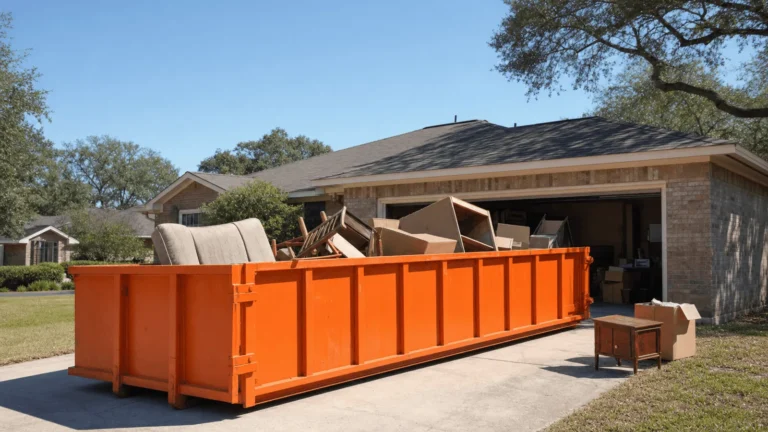
Construction debris is the waste a building or demolition project leaves behind. Texas law names drywall (gypsum board), wood, paper, cartons, rubber and plastics as part of it. On a Houston job, the hard part is not defining the pile. It’s sorting it so the dumpster leaves on time and nothing in it gets turned away.
This is for Houston contractors and homeowners planning a dumpster rental for a remodel or tear-out. A dumpster can look fine from the street and still fail at pickup. Below is the Texas definition, a what-goes-where table, where masonry, tires and paint go instead, how to size a dumpster by weight, and what to check before the first wall comes down.
What counts as construction debris in Texas
The state definition sits in 30 TAC 330.3. It covers waste from construction or demolition projects, meaning anything that’s a by-product of the work or comes off a building as it’s torn down. In plain terms, that’s the wallboard, lumber, cabinets, floors and trim from a remodel project.
A Type IV landfill in Texas may only accept brush, construction or demolition waste, and dry trash that won’t rot. Household and food waste is not allowed there. So the crew’s lunch trash and kitchen garbage belong in a regular can, not with the construction waste.
What goes in a roll off dumpster and what does not
This is the list we load by. If it is on the left, toss it in the dumpster. If it is on the right, it needs another plan before pickup day.
| In the roll-off | Not in the roll-off |
|---|---|
| Remodel and renovation debris | Roofing shingles and roof tear-off |
| Drywall | Concrete, brick, asphalt |
| Lumber and scrap wood | Dirt or fill, rock |
| Flooring and tile | Tires |
| Cabinets and siding | Refrigerators and freezers |
| Windows and doors | Paint, solvents, chemicals, motor oil |
| Yard waste, brush and storm debris | Batteries |
| Household junk and furniture | Hazardous waste, medical waste |
For the longer version with household items, see our full dumpster materials list.
In short, our roll-offs take drywall, lumber and scrap wood, windows and doors, yard waste and brush, and general construction and demolition debris that is not masonry. Accepted materials do not include hazardous waste or roofing shingles. A dumpster rental handles that mixed construction waste well, as long as it is the right mix.
Construction debris removal for concrete, brick and dirt
We don’t take concrete, brick, asphalt, rock or dirt in our dumpsters. That makes construction debris removal a two-step job when masonry is involved.
Asphalt, concrete and rubble are often recycled into aggregate or new asphalt and concrete products, according to the North Central Texas Council of Governments. TxDOT notes that dumping concrete wastes landfill space and material, and that reusing it brings environmental and economic benefits.
Stack that material on its own and call a recycling facility or a landfill that takes it before you load a truck. TCEQ keeps a municipal solid waste facility map with landfill locations and phone numbers, so use it and call to confirm what they take.
Roofing materials are the same story. Shingles and roof tear-off never go in our dumpsters, so line up their route before the crew climbs the ladder.
Waste management for tires, paint and hazardous materials
Hazardous materials need a proper disposal route of their own and never go in a dumpster. TCEQ’s guide to wastes landfills accept lists used oil, lead-acid batteries and regulated hazardous waste as prohibited at all four landfill types. Whole tires cannot be landfilled in Texas either.
- Tires can go to a local government bulky trash event, a landfill that takes tires (usually for a fee), or a scrap tire transporter if you’ve got a lot of them.
- Houston residents can drop paint, solvents and motor oil at a City of Houston Environmental Service Center, within posted limits.
- Harris County runs a household hazardous waste facility by appointment, and it only takes items used in a resident’s home.
- Business chemical waste that a landfill cannot take follows the Texas hazardous and industrial waste rules, never a dumpster.
Check for asbestos before any demolition
Texas requires notice to the Department of State Health Services before demolishing a building, even when no asbestos is present. That notice is due at least 10 working days ahead. The federal NESHAP rule requires the owner or operator of a covered facility to thoroughly inspect before demolition or renovation starts.
Don’t guess which rules apply to your job. Ask the state asbestos program before you start. Any asbestos an inspection turns up does not go in a dumpster, so the state program is also who to ask about handling it.
Lead paint has its own rule. Under the EPA Renovation, Repair and Painting Program, anyone paid to disturb painted surfaces in homes, childcare facilities and preschools built before 1978 must be certified, with trained workers. EPA says the rule generally does not apply to homeowners working on their own pre-1978 home.
Construction dumpster rental by weight, not just dumpster size
Before you book a construction dumpster rental, picture the load. Every dumpster we run is 22 feet long and 8 feet wide. Height and weight limit are what change.
- 20 yard dumpster, 4 feet tall, carries up to 10 tons
- 30 yard dumpster, 6 feet tall, carries up to 9 tons
- 40 yard dumpster, 8 feet tall, carries up to 8 tons
Yes, the smallest dumpster carries the most. Bigger boxes are built with more steel, so there is less legal payload left over. A load of tile and wet lumber can hit its weight limit long before it looks full.
One box on site saves the crew repeated trips to the landfill, as long as it stays under its weight limit. So pick your dumpster size by what the debris weighs, not only by volume. Our construction dumpster rental in Houston page walks through matching a dumpster to the job.
Free drop-off sites, contractors and usable materials
The City of Houston drop-off centers are for residents with proof of address, up to four visits a month. They don’t allow contractor vehicles or dump trailers. Contractor-type material is capped at 4 cubic yards, and rocks, dirt, bricks and concrete are not accepted there.
Those centers are built for a resident’s household load, not a construction project. Most crews book a dumpster rental instead, and our page on dumpster rentals for contractors covers how that works.
Usable materials are a different story. Houston residents can donate leftover building materials like lumber, plywood, cabinets, countertops, doors and windows to the City of Houston Reuse Warehouse at 9003 N. Main. It won’t take construction debris, paint or tear-off shingles, so only bring clean, reusable pieces.
How to sort construction waste so the box passes
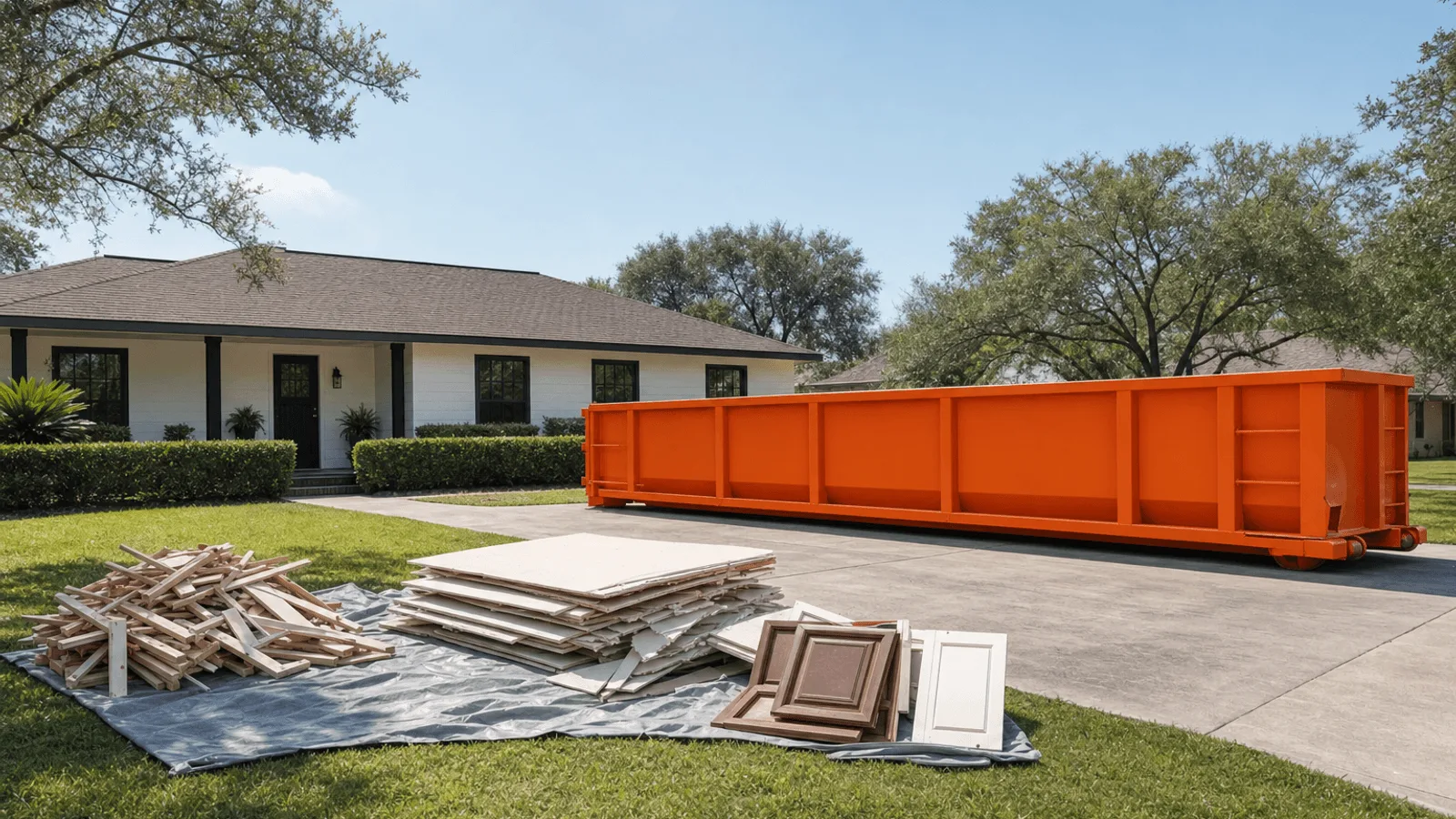
Good waste management on a jobsite starts at the pile. The best approach is to identify each kind of construction waste and separate it at the source. Set up four piles from day one and tell the crew which is which.
- The dumpster pile. Wallboard, wood, cabinets and the rest of the left column go straight in.
- The set-aside pile. Concrete, brick, rock and roofing tear-off wait here for their own haul.
- The hazardous corner. Paint cans, solvents, batteries and oil stay closed, dry and away from the box.
- The reuse pile. Doors, fixtures, cabinets and metal you plan to keep or donate come out before the tear-out gets rough.
Call recycling centers about the set-aside pile early, before it is blocking the driveway. And if the site needs restrooms, place the portable toilets where they won’t block the truck’s path to the dumpster. A dumpster on site simplifies waste management, as long as the crew knows the plan.
When a box is overweight or overfilled
An overweight or overfilled dumpster can’t legally be hauled under DOT and TxDOT overload laws. It stays put until it’s legal. You’ll need to pull out enough debris to bring it back under the limit.
We never bill by the ton for going over. If an overloaded dumpster holds up a scheduled pickup, the dry-run fee in your service agreement applies.
Load heavy material low and even, and keep everything below the top of the walls. That is how a pickup stays on schedule.
Construction debris questions
What is classified as construction debris?
In Texas, it’s waste from construction or demolition projects, including gypsum board, wood, paper, cartons, rubber and plastics. On a remodel, that means wallboard, lumber, flooring, cabinets and similar tear-out.
Can I put construction debris in a dumpster?
Yes, most of it. Drywall, lumber, flooring, tile, cabinets, siding, windows and doors all go in our dumpsters. Concrete, brick, roofing tear-off, tires and chemicals don’t.
Where are the free dump sites in Houston?
The City of Houston runs Residential Drop-Off Centers for residents with proof of address. They bar contractor vehicles and dump trailers and cap contractor-type material at 4 cubic yards.
How do I dispose of old drywall?
It goes in the dumpster with the rest of your remodel debris. Keep it covered and dry if you can, because everything in the box counts toward its weight limit.
What do I do with leftover construction materials?
Houston residents can donate clean lumber, plywood, cabinets, doors and windows to the City of Houston Reuse Warehouse.
Ready to plan your next dumpster rental? Request a dumpster quote or call (979) 826-2815, and we’ll quote a flat rate before delivery.